Learn how a multi-currency payment gateway works, key features, benefits, pricing models, and how businesses accept global payments seamlessly.
Multi-Currency Payment Gateway: Features, Benefits & Setup

A true blue millennial trying to engineer her full time-career around the world of content. How cliché is that?
Table of Contents
A Quick Glance
| In today’s borderless digital economy, accepting payments from customers worldwide isn’t just an advantage—it’s essential. A multi-currency payment gateway enables businesses to accept international payments seamlessly, display prices in local currencies, and manage cross-border transactions efficiently. This comprehensive guide explores what multi-currency payment gateways are, how they work, why they matter, and how modern solutions like Decentro can help your business expand globally with confidence. |
The Global Commerce Revolution: Why Multi-Currency Matters Now
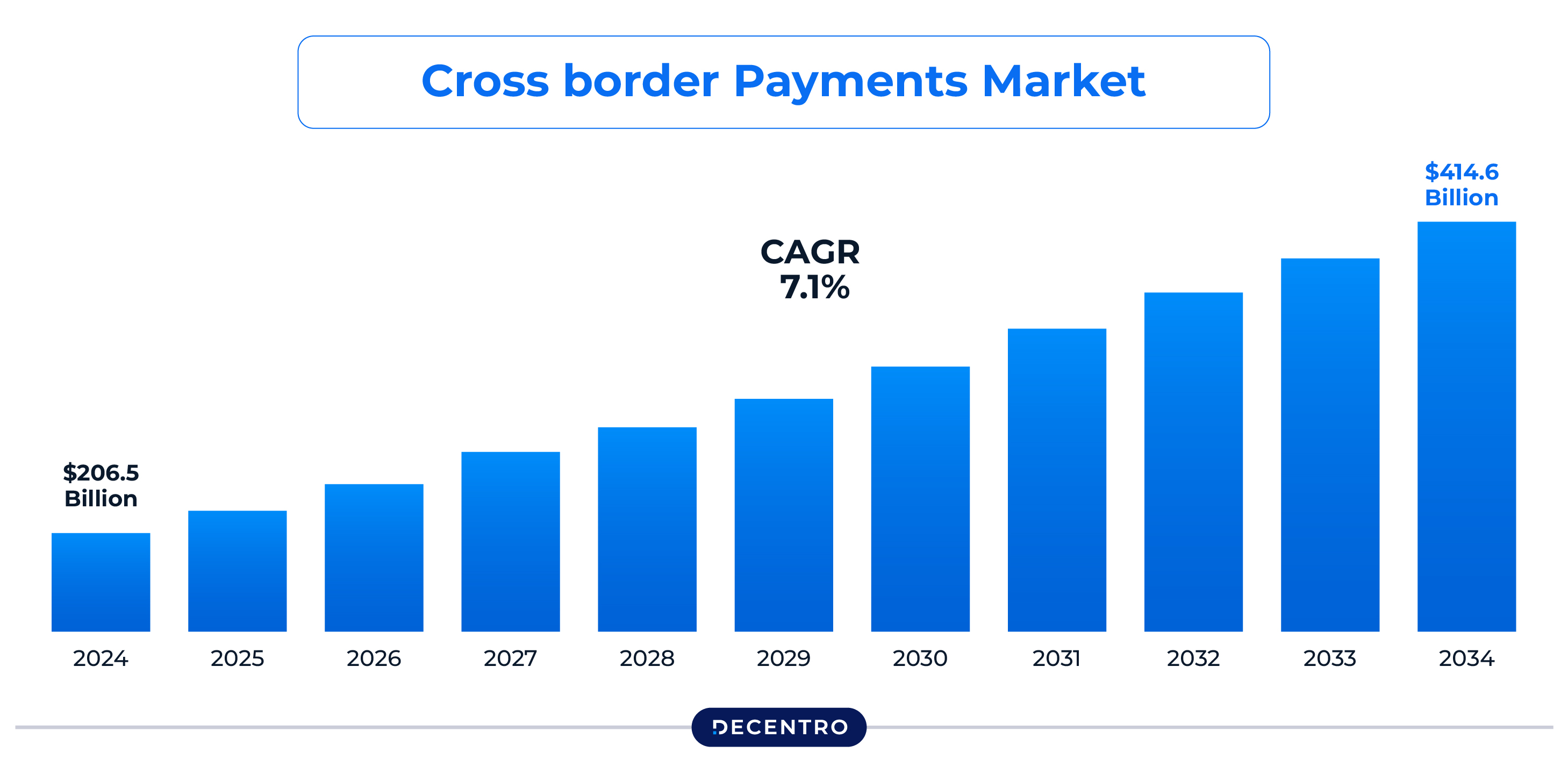
The world of online commerce has fundamentally changed. Cross-border transactions are no longer the exception—they’re becoming the norm. The numbers tell a compelling story: The global cross-border payments market size was estimated at USD 212.55 billion in 2024 and is projected to reach USD 320.73 billion by 2030, growing at a CAGR of 7.1% from 2025 to 2030.
Even more striking, cross-border e-commerce sales hit $396 billion in 2022, accounting for over 11% of total e-commerce sales worldwide, a figure that has more than doubled since 2014. For businesses with global ambitions, these statistics aren’t just interesting—they represent a massive opportunity.
But here’s the challenge: while international customers are ready to buy, 60% of consumers prefer shopping in their native currency. When shoppers encounter unfamiliar currencies, confusing exchange rates, or unexpected conversion fees at checkout, conversion rates plummet. This is where multi-currency payment gateways become game-changers.
Think of it this way: if you’re a software company based in India selling to customers in Europe, Australia, and the United States, your customers expect to see prices in EUR, AUD, and USD, respectively. They want a familiar, comfortable shopping experience—not mental math exercises and currency conversion anxiety.
What Exactly Is a Multi-Currency Payment Gateway?
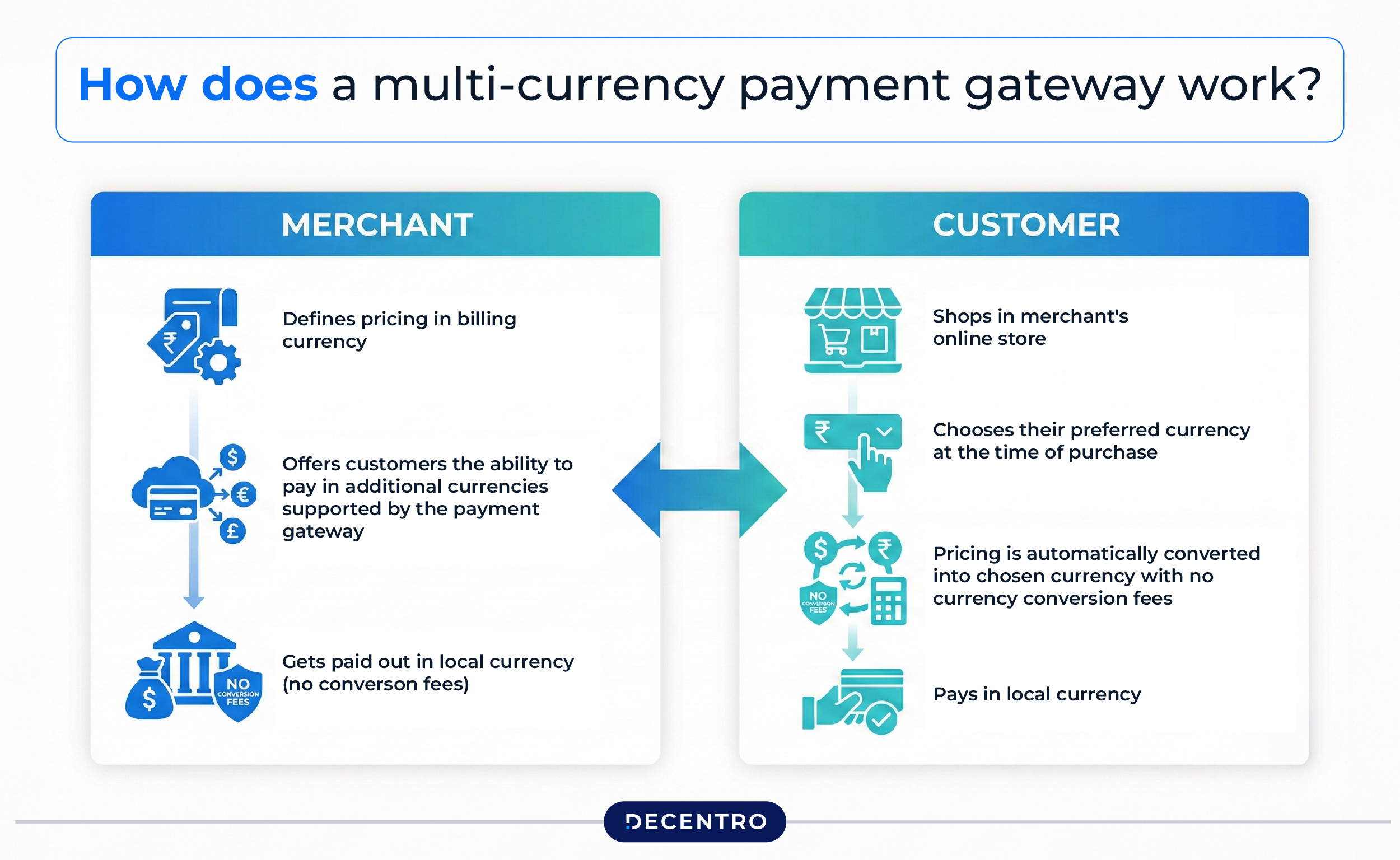
A multi-currency payment gateway is a specialised payment processing system that enables businesses to accept, process, and settle payments in multiple currencies. Unlike traditional payment gateways that force all transactions into a single currency, these advanced systems create a truly localised payment experience for international customers.
At its core, a multi-currency payment gateway acts as a bridge between your business, your customers’ banks, and various international payment networks. It automatically detects the customer’s location, displays prices in their local currency, and processes transactions seamlessly, all while you receive funds in your preferred settlement currency.
The beauty of this system lies in its simplicity for the end user. When a customer from Germany visits your online store, they see prices in euros. A customer from Japan sees prices in yen. Each transaction feels local and familiar, even though your business might be thousands of miles away.
How Multi-Currency Payment Gateways Work: The Complete Process
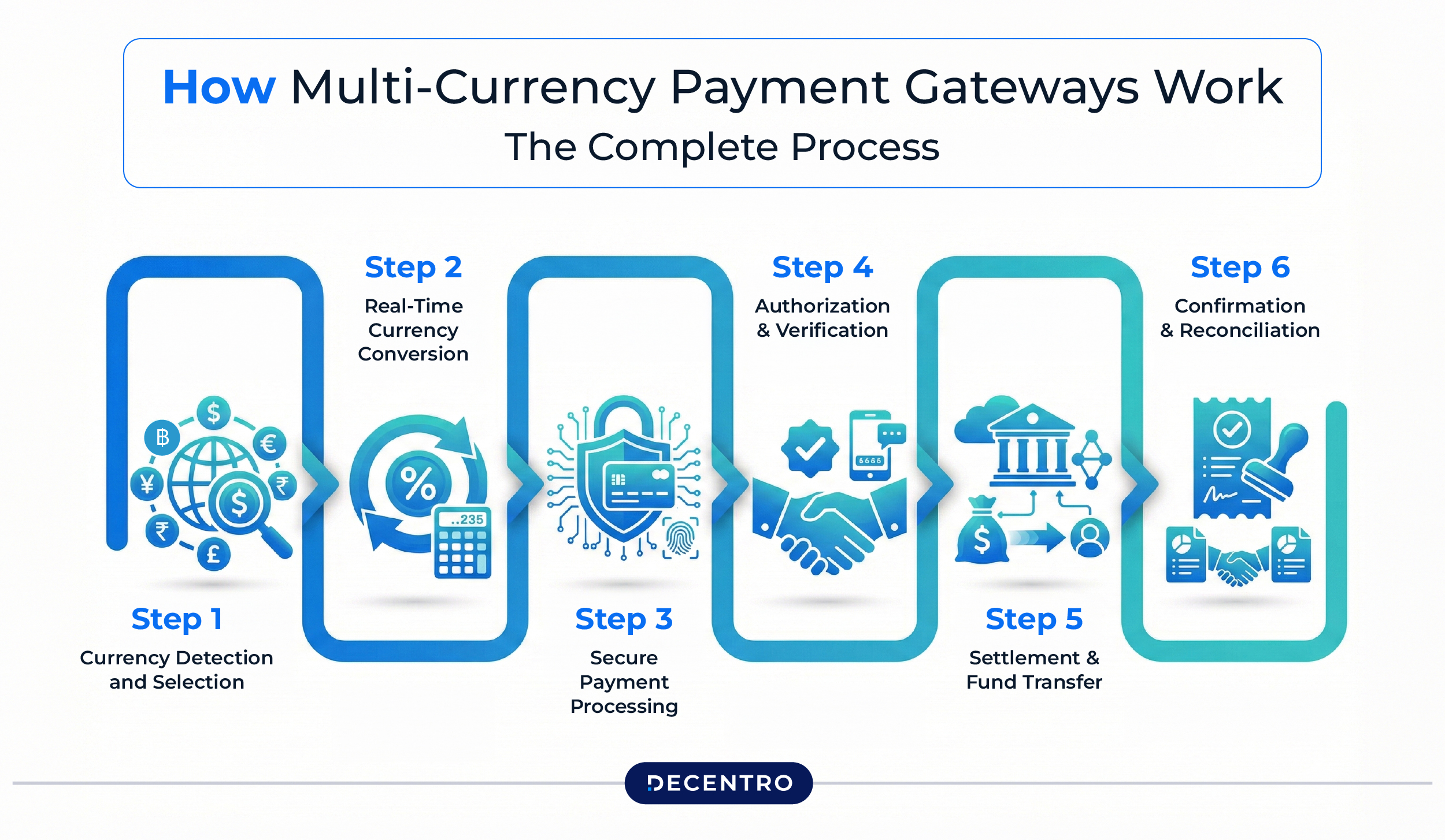
Understanding the mechanics behind multi-currency payments helps you appreciate their value. Here’s what happens behind the scenes when a customer makes an international purchase:
Step 1: Currency Detection and Selection
When a customer lands on your website, the payment gateway uses several signals, IP address, browser language settings, or billing information, to detect their location. The system then automatically displays product prices in the customer’s local currency. Many advanced gateways also allow customers to manually select their preferred currency from a dropdown menu, providing flexibility and transparency.
Step 2: Real-Time Currency Conversion
As the customer browses and adds items to their cart, the payment gateway converts prices from your base currency to the customer’s chosen currency using real-time exchange rates. These rates are typically updated multiple times per day to ensure accuracy. The customer sees exactly what they’ll pay, no surprises, no confusion.
Step 3: Secure Payment Processing
At checkout, the customer enters their payment details (credit card, debit card, or digital wallet credentials). The payment gateway securely captures this information using advanced encryption and tokenisation techniques that comply with PCI-DSS standards—the payment card industry’s strictest security protocols.
Step 4: Authorisation and Verification
The gateway sends the payment information to the appropriate payment processor, which then contacts the customer’s bank or card issuer. The bank verifies that sufficient funds are available and checks for any fraud indicators. This entire authorisation process typically takes just seconds, but includes multiple sophisticated security checks happening in the background.
Step 5: Settlement and Fund Transfer
Once the transaction is authorised, the payment gateway settles the funds. Depending on your configuration, you can choose to receive payments in the original currency the customer used or have them automatically converted to your preferred base currency. Some advanced multi-currency accounts even allow you to hold balances in multiple currencies, giving you flexibility to manage foreign exchange risk strategically.
For exporters utilising special economic zones like GIFT City (Gujarat International Finance Tec-City), there’s additional flexibility in managing foreign currency proceeds. Export businesses can maintain USD or other foreign currency accounts in IFSC Banking Units, allowing them to retain proceeds for up to three months before repatriation. This setup enables strategic working capital management, including the ability to service trade finance obligations, such as factoring or invoice discounting arrangements, directly from foreign currency proceeds before conversion to INR. This approach can optimise cash flow while maintaining FEMA compliance through proper documentation and Authorised Dealer reporting.
Step 6: Confirmation and Reconciliation
Both you and your customer receive transaction confirmations. For your business, the gateway provides detailed reporting that simplifies accounting and reconciliation, automatically categorizing transactions by currency, region, and payment method.
The entire process typically completes in under three seconds from the customer’s perspective, creating a smooth, professional experience that builds trust and encourages repeat purchases.
Why Multi-Currency Payment Gateways Are Critical for Growth
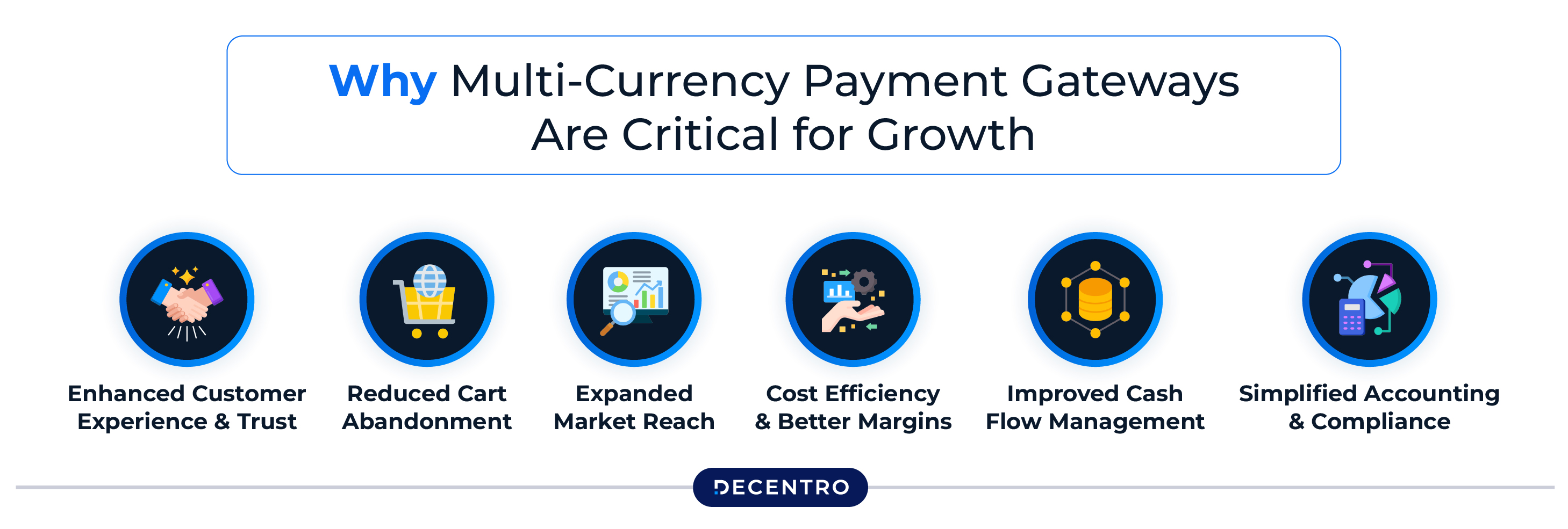
Beyond the technical mechanics, multi-currency payment gateways deliver tangible business benefits that directly impact your bottom line:
Enhanced Customer Experience and Trust
When customers see prices in their own currency, several psychological barriers disappear. They don’t need to Google exchange rates or wonder about hidden fees. This transparency builds trust immediately. Research consistently shows that presenting prices in local currencies can increase international conversion rates by 20-30%. That’s not a marginal improvement,it’s a fundamental shift in how global customers perceive your business.
Reduced Cart Abandonment
One of the biggest killers of online sales is cart abandonment at checkout. International customers who suddenly see unexpected currency conversions, confusing fees, or unfamiliar amounts are significantly more likely to abandon their purchase. Multi-currency gateways eliminate this friction point, keeping customers moving smoothly through checkout.
Expanded Market Reach
With traditional payment systems, expanding internationally meant establishing local bank accounts, navigating complex regulations in each country, and managing multiple payment processors. Multi-currency gateways democratize global commerce, allowing even small businesses to accept payments from customers in dozens or hundreds of countries from day one.
Cost Efficiency and Better Margins
Multi-currency payment gateways typically offer more competitive exchange rates than traditional banks. They also reduce the costs associated with multiple currency conversions and eliminate the need for maintaining separate payment systems for different regions. Many businesses save 1-2% on every international transaction—savings that compound significantly as transaction volume grows.
Improved Cash Flow Management
Advanced multi-currency systems provide sophisticated tools for managing foreign exchange exposure. You can hold funds in multiple currencies, time conversions to take advantage of favorable exchange rates, and gain real-time visibility into your international revenue streams. This level of control was previously available only to large enterprises with dedicated treasury teams.
For businesses engaged in export activities, innovative structures like maintaining foreign currency accounts in IFSC units enable even more sophisticated cash flow strategies. Export proceeds can be retained in foreign currency to match upcoming import obligations or to service trade finance facilities, reducing unnecessary currency conversion costs and hedging natural foreign exchange exposure.
Simplified Accounting and Compliance
Rather than wrestling with spreadsheets and manual reconciliation across multiple currencies, modern multi-currency gateways provide centralized reporting and automated reconciliation. They also help ensure compliance with international tax regulations, anti-money laundering requirements, and data protection standards across different jurisdictions.
Key Features to Look for in a Multi-Currency Payment Gateway
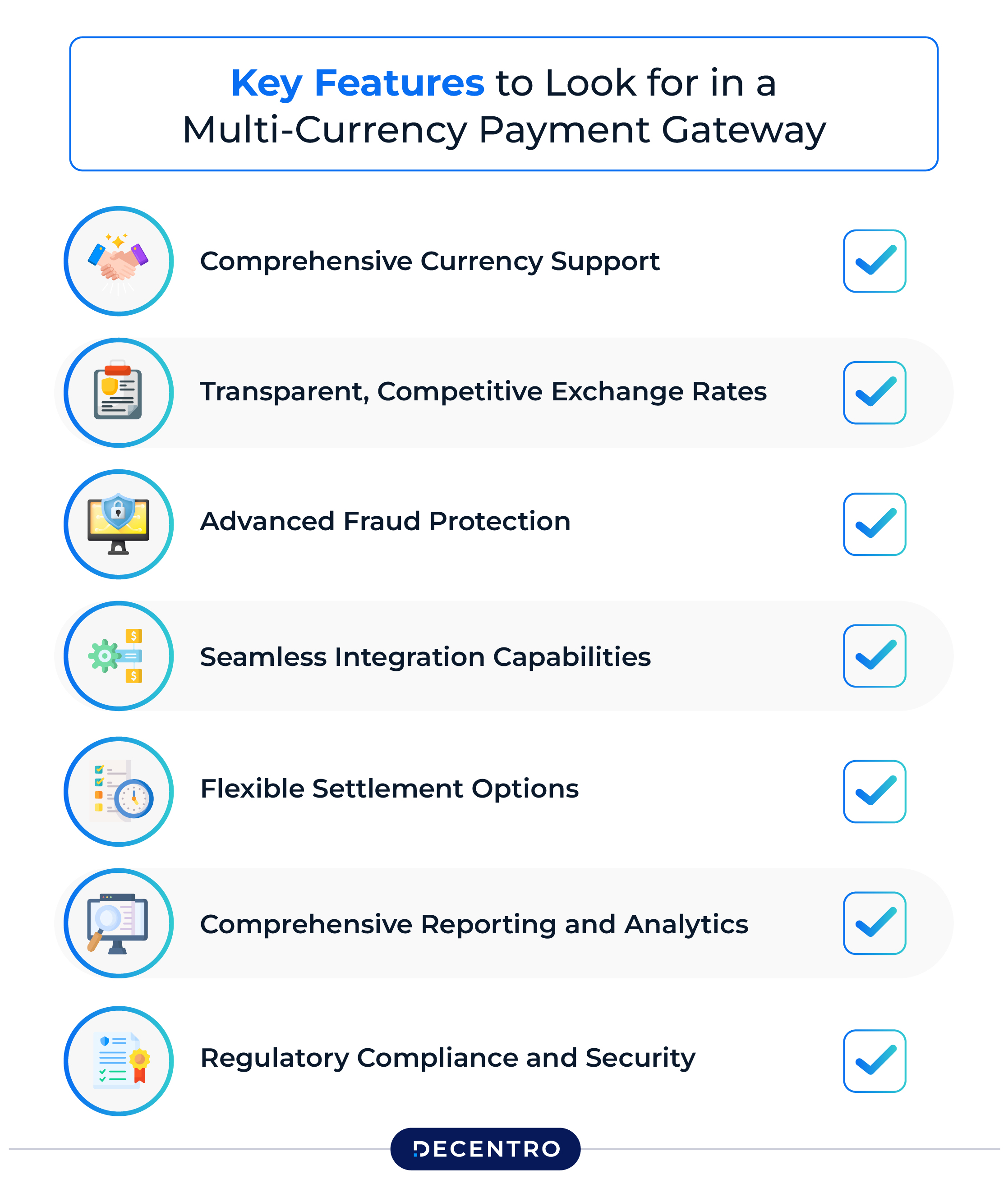
Not all multi-currency payment gateways are created equal. When evaluating solutions for your business, consider these essential features:
Comprehensive Currency Support
The best gateways support 100+ currencies and regional payment methods, ensuring you can serve customers virtually anywhere. Look for providers that support not just major currencies like USD, EUR, GBP, and JPY, but also important emerging market currencies that might be relevant to your specific business.
Transparent, Competitive Exchange Rates
Exchange rate markups can quietly erode your margins. Leading providers use mid-market exchange rates with transparent fee structures, typically charging 0.5-1.5% for currency conversion, significantly better than traditional banks that often charge 3-5%.
Advanced Fraud Protection
International transactions face higher fraud risk. Your gateway should include AI-powered fraud detection, real-time transaction monitoring, automated risk scoring, and comprehensive chargeback protection. These features protect both your revenue and your reputation.
Seamless Integration Capabilities
Your payment gateway needs to work with your existing tech stack. Look for solutions offering robust APIs, pre-built plugins for popular e-commerce platforms (Shopify, WooCommerce, Magento), mobile SDKs, and webhook support for custom implementations.
Flexible Settlement Options
The ability to receive funds in multiple currencies or choose automatic conversion gives you strategic flexibility. Some businesses prefer to maintain balances in high-volume currencies to reduce conversion frequency, while others want immediate conversion to their base currency.
Comprehensive Reporting and Analytics
Data-driven decision-making requires detailed insights. Your gateway should provide real-time dashboards, transaction reports by currency and region, automated reconciliation, and export capabilities for integration with accounting systems.
Regulatory Compliance and Security
International payments involve complex regulatory requirements. Your provider should handle PCI-DSS compliance, support Know Your Customer (KYC) and Anti-Money Laundering (AML) requirements, and ensure GDPR compliance for European transactions.
Who Needs a Multi-Currency Payment Gateway? Use Cases by Industry
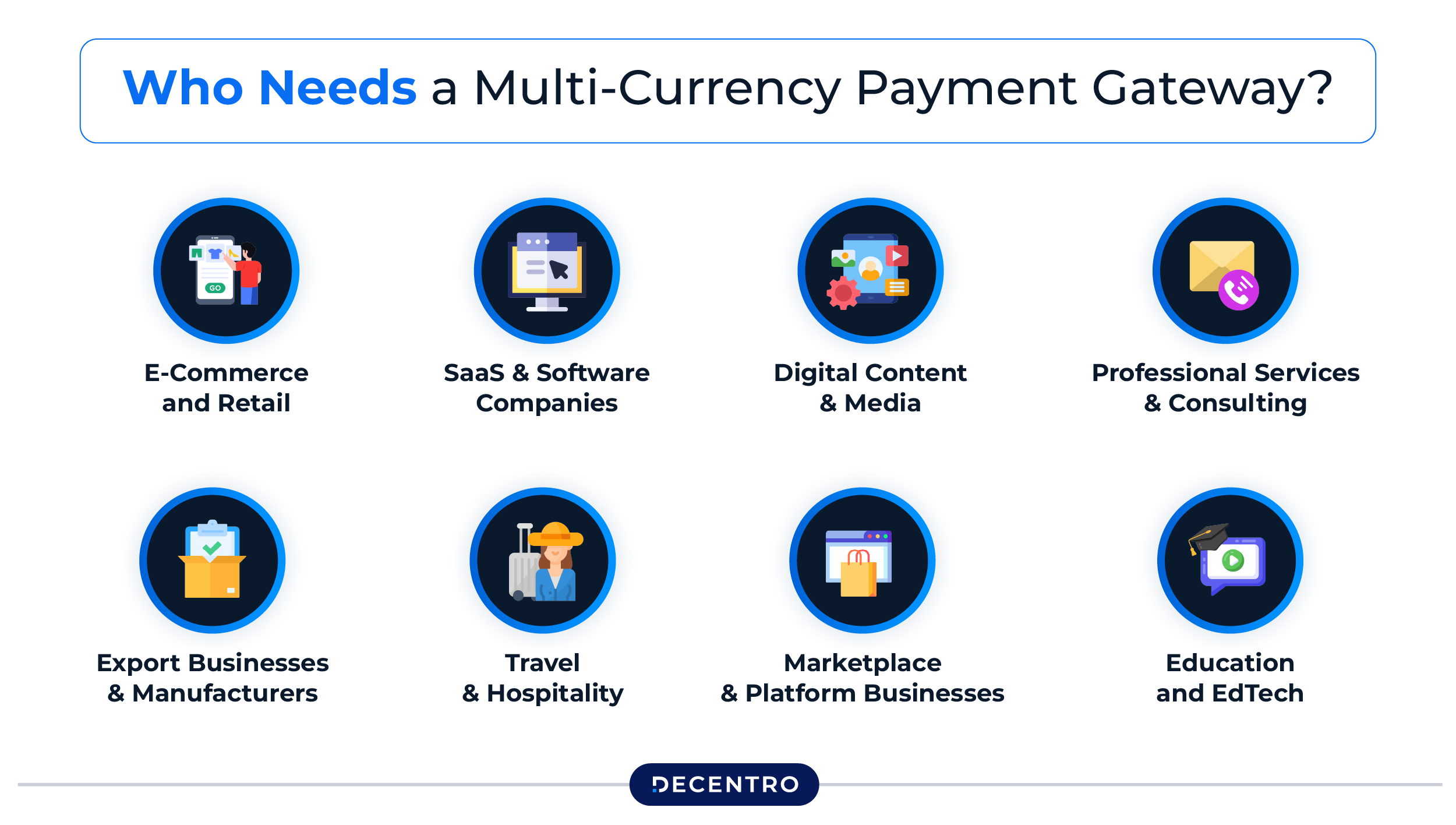
Multi-currency payment gateways aren’t one-size-fits-all solutions—they deliver specific value across different industries and business models:
E-Commerce and Retail
Online retailers selling physical goods internationally benefit tremendously from displaying prices in local currencies. Whether you’re selling fashion, electronics, or specialty goods, removing currency conversion friction at checkout directly increases conversion rates. Cross-border e-commerce businesses typically see 15-25% improvement in international sales after implementing multi-currency capabilities.
SaaS and Software Companies
Subscription-based software businesses with global customer bases need seamless recurring billing in multiple currencies. Multi-currency gateways enable automatic subscription renewals in the customer’s preferred currency, reducing failed payments and churn. Companies like productivity tools, project management platforms, and cloud services rely on these systems to scale internationally without managing separate payment infrastructure in each region.
Digital Content and Media
Streaming services, online courses, e-books, and digital content platforms serve global audiences with wildly different purchasing power. Multi-currency capabilities allow these businesses to implement regional pricing strategies while maintaining a unified payment infrastructure. This enables market-specific pricing optimization that maximizes revenue across diverse economic contexts.
Professional Services and Consulting
Consultants, agencies, and professional service providers working with international clients need to invoice in client currencies while managing their own cash flow efficiently. Multi-currency gateways simplify cross-border invoicing, reduce payment delays caused by currency confusion, and provide clear audit trails for international revenue recognition.
Export Businesses and Manufacturers
Companies exporting goods need sophisticated currency management beyond simple payment acceptance. Export-focused businesses benefit from features like foreign currency retention accounts (particularly in special economic zones like GIFT City), integration with trade finance solutions including factoring and invoice discounting, and the ability to match foreign currency revenues with import obligations. For example, an exporter utilizing invoice factoring can structure repayments directly from export proceeds held in foreign currency accounts, optimising working capital without unnecessary conversions.
Travel and Hospitality
Hotels, tour operators, and travel booking platforms serve inherently international customer bases. Multi-currency payment gateways are essential for displaying prices in traveler currencies, managing deposits and full payments across different currencies, and handling the complex refund scenarios common in travel bookings.
Marketplace and Platform Businesses
Multi-sided marketplaces connecting buyers and sellers across borders need sophisticated payment splitting capabilities in multiple currencies. Whether you’re running a freelance platform, a B2B marketplace, or a rental/sharing economy service, multi-currency support with flexible settlement is critical for international growth.
Education and EdTech
Online education platforms, universities offering distance learning, and educational content providers increasingly serve global student populations. Multi-currency payment gateways enable these institutions to accept tuition and fees in student currencies while simplifying financial aid, refunds, and installment payment programs across borders.
Current Trends Shaping Multi-Currency Payments in 2026
The multi-currency payment landscape is evolving rapidly. Understanding these trends helps you future-proof your payment infrastructure:
Real-Time Settlement and Instant Payments
The shift toward real-time payments is accelerating globally. Systems like India’s UPI (which processed international transactions with several countries in 2024) and similar instant payment networks are changing customer expectations. By 2027, cross-border person-to-person payments may enable instant payouts directly from bank accounts, potentially reducing costs by up to 40% compared to traditional methods.
ISO 20022 Messaging Standards
This new global standard for payment messaging is being adopted by major clearing systems worldwide. It enables richer transaction data, improved tracking, and better reconciliation. For businesses, this means more transparency, fewer payment failures, and easier compliance.
Blockchain and Cryptocurrency Integration
While still representing a small fraction of total cross-border payments, blockchain-based solutions and stablecoins are gaining traction for specific use cases. They offer benefits like faster settlement, lower costs for certain corridors, and 24/7 availability. Major payment providers are increasingly offering crypto options alongside traditional currencies.
AI-Powered Fraud Detection
Artificial intelligence is revolutionizing payment security. Modern systems use machine learning to detect fraudulent patterns in real-time, analyzing hundreds of data points per transaction. This reduces false declines (which frustrate legitimate customers) while catching actual fraud more effectively.
Open Banking and Account-to-Account Transfers
Open banking regulations, particularly in Europe and Asia, are enabling direct bank-to-bank transfers without traditional card networks. This can significantly reduce transaction costs while maintaining security, creating new opportunities for cost-effective cross-border payments.
Regulatory Harmonisation Efforts
Organisations like the Financial Stability Board are working to harmonise cross-border payment regulations globally. This should reduce compliance complexity, speed up settlement times, and lower costs as standards become more consistent across jurisdictions.
Common Challenges and How to Address Them
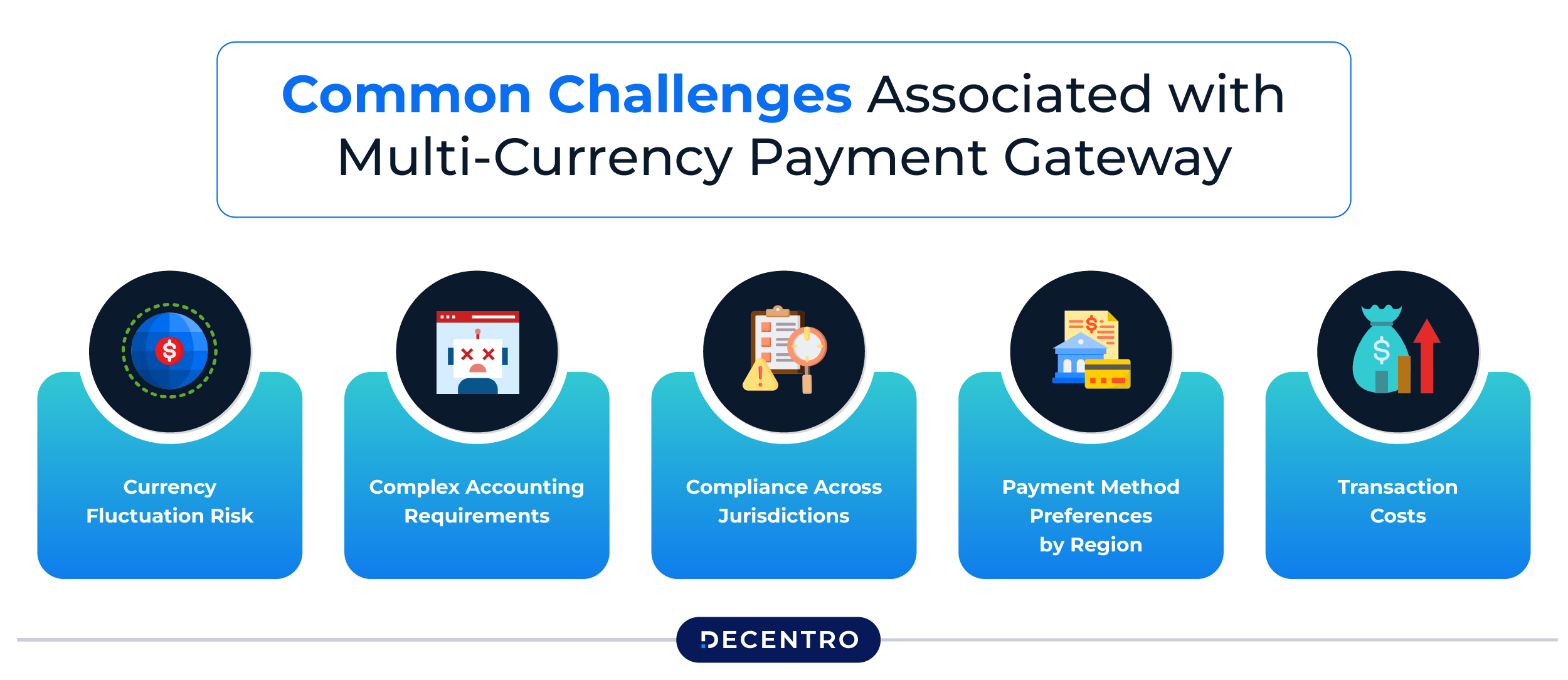
While Common Challenges offer tremendous benefits, businesses should be aware of potential challenges:
Currency Fluctuation Risk
Exchange rates can change rapidly, potentially affecting your margins. Smart businesses use natural hedging (matching expenses and revenues in the same currency where possible), strategic currency holdings, and dynamic pricing strategies that adjust based on market conditions.
Complex Accounting Requirements
Managing revenue in multiple currencies can complicate financial reporting. The solution is choosing a gateway with robust accounting integrations and automated reconciliation. Many modern systems integrate directly with platforms like QuickBooks, Xero, or NetSuite, automating currency-specific categorisation.
Compliance Across Jurisdictions
Different countries have different rules around data protection, consumer rights, and financial regulations. Working with a payment provider that has expertise in multiple jurisdictions and handles compliance on your behalf significantly reduces this burden.
Payment Method Preferences by Region
Credit cards dominate in North America, but customers in other regions prefer different methods—bank transfers in Europe, digital wallets in Asia, and cash-based systems in some emerging markets. The best multi-currency gateways support regional payment preferences alongside currency options.
Transaction Costs
While multi-currency gateways typically offer better rates than banks, costs still add up. Carefully compare providers, negotiate rates based on your expected volume, and consider the total cost of ownership, including setup fees, monthly charges, and transaction fees.
How Decentro Empowers Cross-Border Success
As you evaluate multi-currency payment solutions, it’s worth considering modern platforms that combine global reach with local expertise. Decentro offers comprehensive cross-border payment functionality designed specifically for growing businesses and startups navigating international expansion.
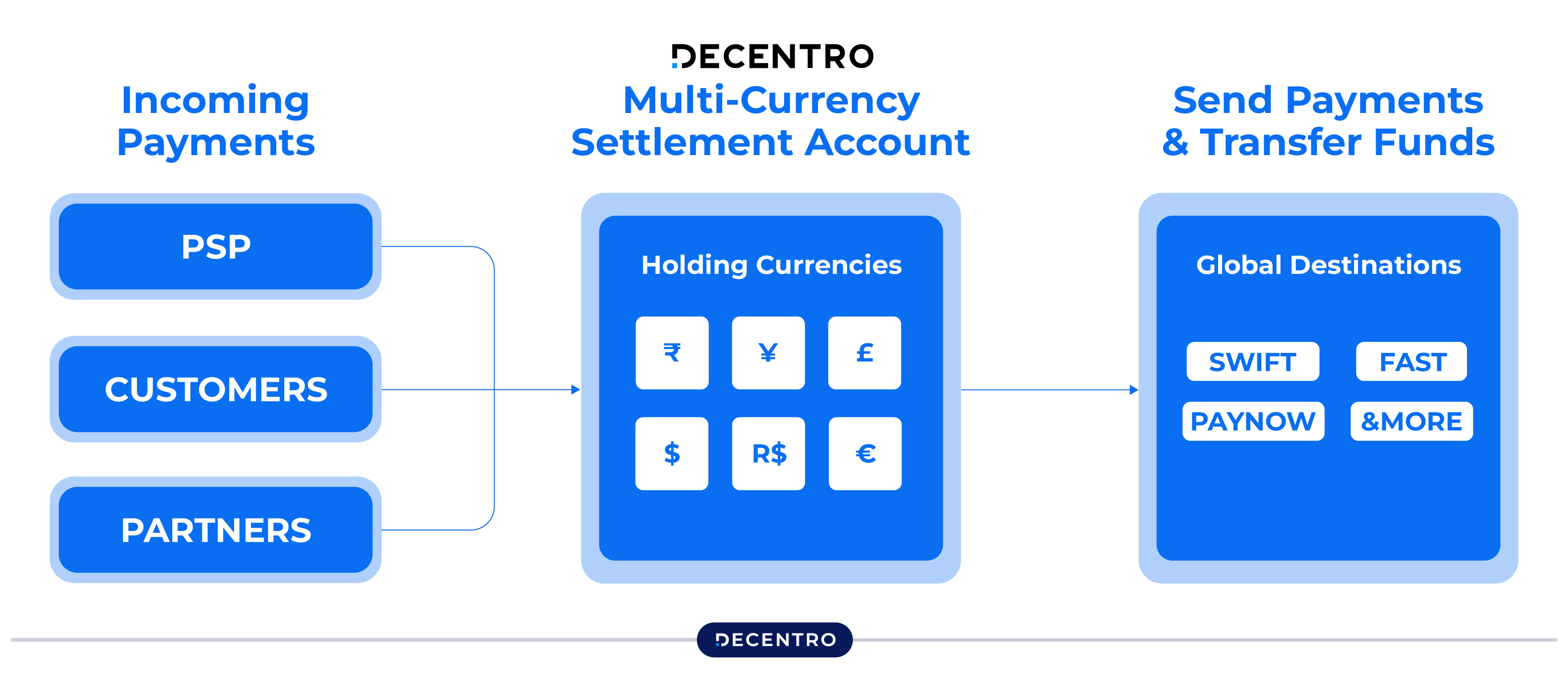
Decentro’s platform provides seamless multi-currency payment acceptance with competitive exchange rates, secure transaction processing meeting international compliance standards, and flexible settlement options that give you control over your cash flow. The solution integrates easily with your existing systems through well-documented APIs and offers real-time reporting and analytics to help you make data-driven decisions about your international business.
Understanding FX Fees and Pricing Models
One of the most critical, yet often confusing, aspects of choosing a multi-currency payment gateway is understanding the true cost structure. Decentro believes in complete transparency around foreign exchange fees and pricing, helping businesses make informed decisions.
Exchange Rate Markup: Most providers advertise their transaction fees prominently but hide significant margins in exchange rates. Decentro uses mid-market exchange rates (the real interbank rate you see on financial news sites) plus a transparent markup typically ranging from 0.5% to 1.5%, depending on currency pair and transaction volume. This is substantially better than traditional banks, which often embed 3-5% markups into their rates without disclosure.
Volume-Based Pricing: As your international business grows, your payment processing costs should decrease proportionally. Decentro offers tiered pricing structures where per-transaction fees and FX markups decrease at higher monthly volumes. For example, businesses processing over $100,000 monthly in cross-border payments typically qualify for preferential rates that can save thousands annually.
Transaction Fees: Beyond currency conversion, understand the per-transaction costs. Decentro’s transparent fee structure includes clearly disclosed per-transaction charges that vary by payment method (typically 1.5-2.9% for card payments, lower for bank transfers), no hidden monthly minimum fees or platform charges, and volume discounts that activate automatically as you scale.
Settlement Currency Flexibility: A unique aspect of Decentro’s pricing is the flexibility around settlement. You can choose to receive funds in your base currency (with conversion at competitive rates), hold balances in multiple foreign currencies to reduce conversion frequency, or for export-oriented businesses, leverage special structures like IFSC foreign currency accounts that allow strategic retention and utilisation of export proceeds before repatriation.
No Surprise Charges: Hidden fees destroy profitability. Decentro eliminates common surprise charges like setup fees, integration costs, minimum monthly commitments, dormancy or inactivity charges, and excessive chargeback fees. What you see in your pricing agreement is what you pay—no fine print surprises six months down the line.
What sets solutions like Decentro apart is the focus on removing complexity. Rather than wrestling with multiple providers, confusing fee structures, and fragmented reporting, you get a unified platform that handles the technical and regulatory heavy lifting, letting you focus on growing your business globally.
Getting Started: Best Practices for Implementation
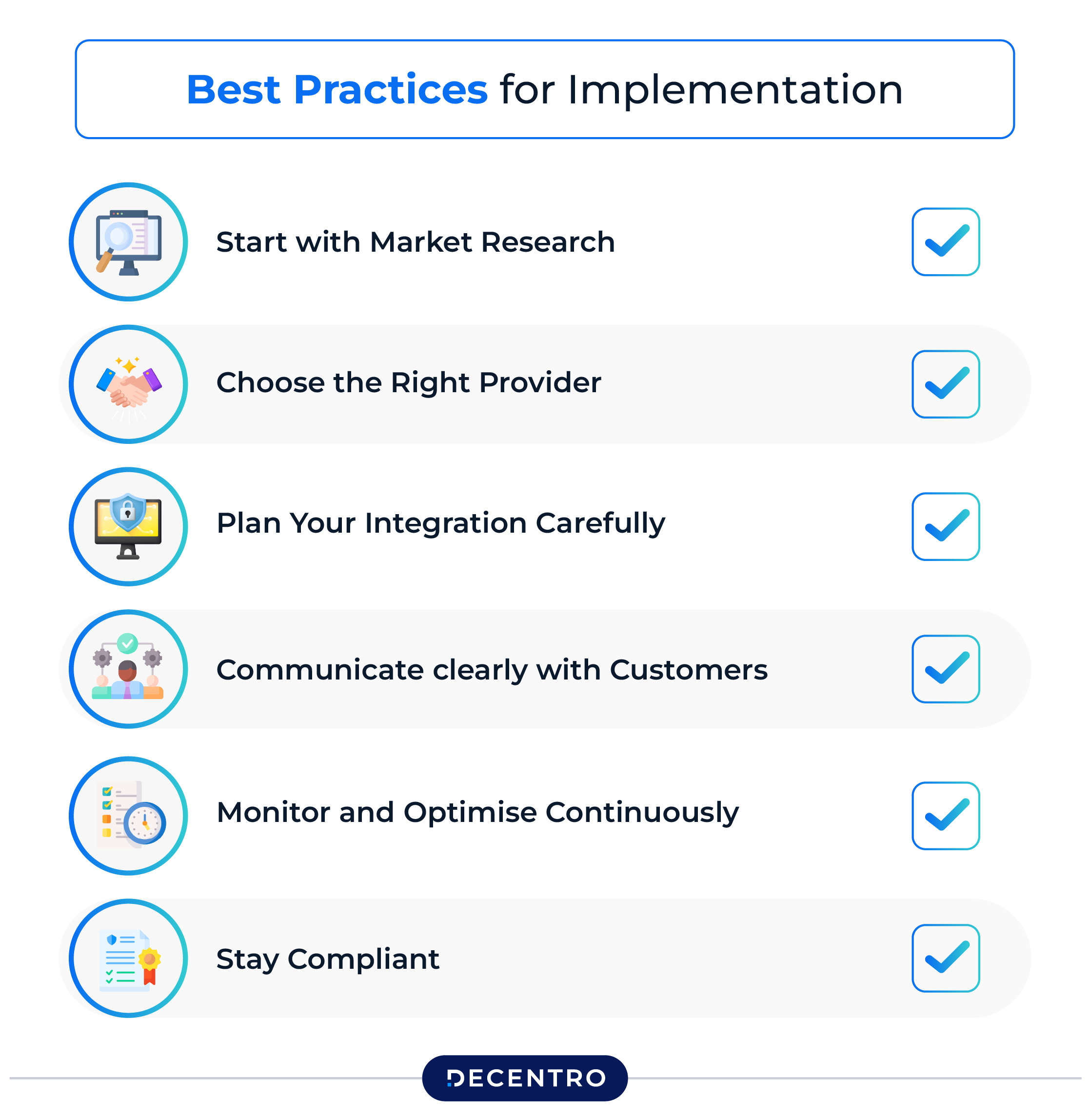
Ready to implement a multi-currency payment gateway? Follow these best practices:
Start with Market Research: Identify which markets generate the most traffic and have the highest potential for conversion. Focus on supporting currencies for these regions first, then expand gradually based on data.
Choose the Right Provider: Evaluate providers based on currency coverage, integration ease, pricing transparency, security features, and customer support quality. Don’t just look at advertised rates—understand the total cost structure.
Plan Your Integration Carefully: Work with your development team or platform provider to ensure smooth integration. Test thoroughly in sandbox environments before going live, particularly for edge cases like refunds, partial payments, and currency switching.
Communicate clearly with Customers: Make it obvious that you support local currencies. Display currency selectors prominently, show all costs transparently including any conversion fees, and provide clear customer support for payment-related questions.
Monitor and Optimise Continuously: Track conversion rates by currency and region, analyse which payment methods perform best in each market, monitor payment failures and their causes, and adjust your strategy based on real data.
Stay Compliant: Ensure you understand tax obligations in markets where you accept payments, maintain proper documentation for international transactions, and keep updated on regulatory changes that might affect your business.
Conclusion: Your Gateway to Global Growth
The modern digital economy knows no borders. Whether you’re a SaaS startup with customers across five continents, an e-commerce business expanding beyond your home market, or a service provider working with international clients, multi-currency payment gateways are no longer optional,they’re essential infrastructure.
The statistics are clear: the cross-border payments market is experiencing explosive growth, reaching toward $1 trillion annually. Customers worldwide expect localised payment experiences. Businesses that provide them see conversion rates jump by 20-30% or more.
The question isn’t whether to implement multi-currency payments—it’s how quickly you can get it right. With the right payment gateway partner, you can transform international complexity into a competitive advantage. You can turn global expansion from a daunting challenge into a growth engine.
As you evaluate your options, look for solutions that offer comprehensive currency support, transparent pricing, robust security, and seamless integration with your existing systems. Consider platforms like Decentro that specifically understand the needs of growing businesses navigating cross-border complexity.
The global marketplace is open for business. With multi-currency payment capabilities, your business can be truly global too, serving customers anywhere, in their currency, on their terms. That’s not just good technology. It’s good business.
Ready to explore how multi-currency payments can accelerate your global expansion?
Frequently Asked Questions
1. What is the difference between a multi-currency payment gateway and a regular payment gateway?
Regular payment gateways process everything in one currency, forcing customers to deal with bank exchange rates and surprise fees. Multi-currency gateways enable customers to pay in their local currency with transparent rates, resulting in a 20-30% increase in international conversion rates. Businesses also get flexibility to settle in multiple currencies and manage FX risk strategically.
2. How much do multi-currency payment gateways cost?
Three main costs: transaction fees (1.5-2.9% for cards), FX conversion markup (0.5-1.5% for good providers vs 3-5% for banks), and sometimes setup/monthly fees. Best providers offer volume discounts—businesses processing $100K+ monthly get better rates. Look at total costs, not just advertised transaction fees. Most businesses save 1-2% per international transaction versus traditional banks.
3. Can exporters use these gateways with trade finance like factoring?
Yes. Exporters can maintain foreign currency accounts in GIFT City IFSC units, retaining export proceeds in USD/other currencies for up to 3 months. During this period, they can repay factoring advances directly from FCY accounts—avoiding unnecessary conversions. For example, if Moglix/Credlix advances 80-90% on invoices, repayment comes straight from export proceeds in the FCY account before INR conversion, reducing costs while staying FEMA-compliant.
4. Which industries benefit most from multi-currency gateways?
E-commerce/retail (15-25% sales boost), SaaS companies (lower failed payments), export businesses (better FX management + trade finance integration), travel/hospitality (international customers), marketplaces (multi-sided currency needs), and professional services (simpler cross-border invoicing). Any business with significant international customers or complex cross-border cash flows sees major improvements.